Scientific Management (Frederick Winslow Taylor)
Frederick Winslow Taylor's scientific management — the 'mental revolution', the causes of inefficiency, and the four principles of scientific management.
Originally published in January 2011 on Dr. Özgür Zan's original management blog, and preserved here in its original form.
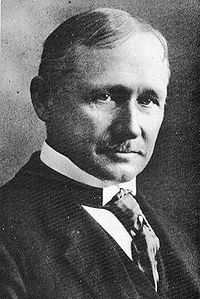
Frederick Winslow Taylor, was born in 1856, in America, is a mechanical engineer who relentlessly pursued to improve industrial efficiency. He is known as the father of scientific management.
Scientific Management
Workmen thought that it is for their best interests to go slow instead of to go fast because they believed that if they were to double their output in the coming year, half of them would be out of a job before the year was out. Taylor asserted that this is a fallacious view. According to him the truth is: “even though that labor-saving device may turn out ten, twenty, thirty times that output that was originally turned out by men in that trade, the result has universally been to make work for more men in that trade, not work for less men.” He justified his view with the efficiency increase in cotton industry. In Manchester, in 1840, there were 5,000 weavers and at the time of Taylor it was 265.000. He asked the question: “has the introduction of labor-saving machinery (in cotton industry in Manchester), which has multiplied the output per man by tenfold, thrown men out of work?“.
Mental Revolution
Since he knew the reasons of workmen’s fallacious view (if they work more efficiently, some of them will lose their job), he did not blame those workmen. Instead, he tried to explain why the opposite was true. He listed three reasons for the inefficiency:
-
Deceptive belief that a material increase in the output of each man or each machine in the trade would throw people out of work.
-
Defective management systems, which made it necessary for each workman to soldier (purposefully operating well below their capacity), to protect his own best interests
-
Inefficient rule of thumb methods, which were almost universal in all trades, which cost much wasted effort
Taylor succeeded to increase efficiency by applying the principles of scientific management. He asserted that “scientific management does not exist and cannot exist until there has been a complete mental revolution on the part of the workmen working under it, as to their duties toward themselves and toward their employees, and a complete mental revolution in the outlook for employers, toward their duties, toward themselves and toward their workmen.”
Four Principles of Scientific Management:
Taylor explained the Principles of Scientific Management in his book which was published in 1911:
-
Replace rule of thumb work methods with methods based on a scientific study of the tasks.
-
Scientifically select and then train, teach, and develop the workman, whereas in the past the employee (or workmen) chose his own work and trained himself as best he could.
-
Provide “Detailed instruction and supervision of each worker in the performance of that worker’s discrete task”
-
Divide work nearly equally between managers and workers, so that the managers apply scientific management principles to planning the work and the workers actually perform the tasks.